
rahnasheri.com

Author name: rahnashe02@gmail.com

Uncategorized

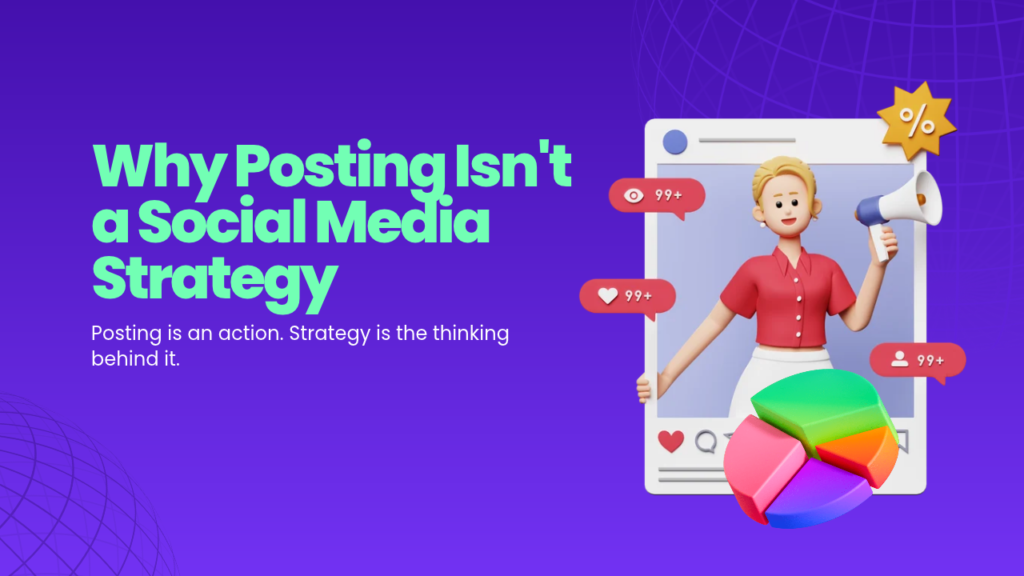
Why Posting Isn’t a Social Media Strategy

Why Posting Isn’t a Social Media Strategy Many businesses believe they have a social media strategy because they post regularly. A photo goes up on Monday, a quote on Wednesday, a promotional graphic on Friday. The calendar looks full, the accounts look active, and everyone feels productive. But activity and strategy are two different things. Posting is an action. A strategy is the thinking that decides which actions are worth taking, who they are for, and what they should achieve. Without that thinking, you are simply filling space on the internet and hoping something sticks. If your social accounts are busy but your results are quiet, this is probably why. The good news is that fixing it does not require a bigger budget or a viral moment. It requires a few honest questions and a willingness to answer them properly. Let’s walk through them. Clear Goals Start with the question most people skip: what do you actually want social media to do for your business? “Grow our presence” is not a goal. Neither is “get more likes.” A goal is something you can point to and say, we reached it or we didn’t. It might be sending more visitors to your website, generating enquiries from potential customers, building a list of email subscribers, or making your brand easier to recognise in your niche. Different goals lead to very different decisions. If you want enquiries, your content needs clear calls to action and an easy path to contact you. If you want awareness, you will care more about reach and shares than clicks. If you want to build trust, you will lean on helpful, educational content that shows you know your field. It also helps to pick one main goal at a time. When everything is a priority, nothing gets proper attention. Choose the outcome that matters most for the next three months, and let it guide everything else. When someone asks why you posted a certain thing, you should be able to answer in one sentence. Target Audience Once you know what you want, you need to know who you are talking to. This is where many accounts quietly go wrong. They speak to everyone, which usually means they connect with no one. Think about the real people who buy from you or could benefit from your work. What do they struggle with? What questions do they keep asking? What do they already understand, and what confuses them? Which platforms do they actually spend time on, and what are they hoping to find when they scroll? You do not need a complicated research project to start. Look at your existing customers, read the comments and messages you already receive, and notice the language people use when they describe their problems. That language is gold. When your content sounds like the conversation already happening in your audience’s head, it feels relevant instead of random. Platform choice matters here too. Being everywhere is exhausting and rarely effective. It is far better to show up well on one or two platforms where your audience genuinely is, than to spread yourself thin across five and do none of them justice. Content Plan Now we reach the part most people think of first: the content itself. A content plan is not just a list of dates. It is a set of themes that support your goal and speak to your audience. A useful way to think about it is to choose a handful of topics you want to be known for, and rotate through them in different formats. You might share practical tips, explain common mistakes, show how your work happens behind the scenes, answer customer questions, and occasionally promote what you offer. When people see a pattern, they start to understand what you stand for. Variety in format helps as well. Some ideas work best as a short video, others as a carousel, a simple text post, or a story. Let the idea decide the format instead of forcing every thought into the same template. A plan also protects you from the daily panic of “what should I post today?” When you have themes and a rough schedule, you can create with a clearer head. Be realistic about what you can maintain. A modest schedule you keep up for months will beat an ambitious one that collapses after three weeks. Finally, remember that promotion should be the smaller part of the mix. If every post asks for a sale, people tune out. Give them something useful first, and they will be far more open when you do ask. Engagement Social media is called social for a reason. Too many brands treat their accounts like a noticeboard, pinning up messages and walking away. But the platforms reward conversation, and so do people. Engagement works in both directions. Reply to comments thoughtfully, not with a quick emoji but with something that moves the conversation forward. Answer questions in your direct messages promptly. Take time to visit other accounts in your space, leave genuine comments, and join discussions where your expertise adds value. This is also where relationships begin. A person who has had a friendly exchange with your brand is far more likely to remember you, trust you, and eventually buy from you. Those small interactions build something a scheduled post never can. Ask questions in your content and invite opinions. Pay attention to what people say back, because their responses often tell you exactly what to create next. Treat your audience as participants, not spectators, and your accounts will start to feel like a community rather than a broadcast channel. One caution: engagement should be sincere. Chasing numbers through gimmicks might bump a metric for a day, but it will not create loyal followers. Real conversations take more effort, and that is exactly why they stand out. Analytics If you never look at your results, you are guessing. Analytics turn guessing into learning. Every major platform gives you data about reach, engagement, clicks, follower


Uncategorized

Digital Marketing Trends Shaping the Future

Digital Marketing Trends Shaping the Future Marketing rarely stands still. Just when you feel comfortable with a platform or a tactic, something shifts: an algorithm update, a new tool, a change in how people look for answers. If you run a small business or work in marketing, keeping up can feel like a second job. The good news is that you do not need to chase every new thing. Most of the digital marketing trends worth your attention share one thread. They move towards experiences that are more helpful, more personal and more trustworthy for real people. Once you see that pattern, it gets much easier to decide where your time and budget should go. Here are the trends shaping the future of digital marketing, and what each one means in practice. AI is becoming an everyday marketing assistant Artificial intelligence is already part of how many marketers work. It helps with drafting emails, sorting customer data, suggesting ad variations and speeding up research. That will only deepen. The real opportunity is not replacing people. It is removing repetitive tasks so you can spend more time on strategy and creativity. There is a catch. When everyone can produce content quickly, average content becomes easy to find and easy to ignore. The businesses that stand out will add what a tool cannot: real knowledge, a clear opinion and honest stories from their own work and customers. Use AI for outlines, research and first drafts if it helps, but edit in your own voice and check every fact before you publish. Readers can tell when nobody is really home behind the words. Search is changing shape People still search, but how they search is changing. Many now type full questions, speak to their phones, or read an AI generated summary before clicking anything. Others skip traditional search altogether and look for answers on social platforms and video sites. For your website, this means clear, direct answers matter more than ever. Write content that answers one specific question well, in plain language, near the top of the page. Keep your Google Business Profile accurate and complete if you serve a local area. Cover important subjects in depth across several connected pages instead of publishing one thin post. Being trusted and mentioned across the web also helps you get surfaced, so reviews, partnerships and useful guest content all count. Short video keeps earning attention Short videos have changed what people expect from brands. Viewers are happy to watch a quick, honest clip that shows how something works, answers a common question or gives a peek behind the scenes. Polished production is no longer the main ingredient. Clarity and personality are. You do not need a studio. A phone, decent light and a clear idea are enough to begin. Start with the questions customers ask you most often and answer one per video. Reuse the same footage across platforms, and add captions, because many people watch with the sound off. Consistency beats perfection here, since the format rewards those who keep showing up. Privacy and personalisation are growing together Customers want relevant messages, but they are also more aware of how their data is used. Laws, browsers and platform rules are all moving towards stronger privacy. That pushes marketers to rely less on tracking people around the internet and more on information customers choose to share directly. This is often called first party data, and it is a gift if you handle it well. An email list, a short preference survey, a quiz or a loyalty programme all let people tell you what they actually want. Then you can personalise in ways that feel helpful rather than intrusive, such as recommending the right product or sending content that matches their interests. Be open about what you collect and why. Trust is slow to build and quick to lose, so treat it as an asset. Community and creators carry more weight People trust other people more than they trust adverts. That is why creators, customer communities and honest reviews keep growing in influence. Smaller creators with loyal, focused audiences often build stronger trust than very large accounts, and they can be more affordable for smaller businesses. You can apply this without a big budget. Encourage happy customers to share their experiences and make it easy for them to do so. Feature their photos and words, with permission. Reply to comments and questions properly instead of leaving them hanging. If it suits your business, create a small space such as a group or newsletter where your best customers can talk to you and to each other. A community gives you feedback, loyalty and word of mouth that paid ads struggle to match. Interactive and conversational experiences Customers increasingly expect quick, two way interaction. Chat features on websites, messaging apps, quizzes, calculators and simple tools all let people get what they need without waiting or hunting through pages. Even a basic version can help. A short quiz that points visitors to the right service, or a calculator that estimates a price, gives them value immediately and gives you useful insight in return. If you offer messaging support, make sure a real person can step in when the conversation gets complicated. Automation works best when it saves time for the customer, not when it gets in their way. Measurement is moving towards real outcomes Start by deciding what success looks like before you launch a campaign. Track a small number of measures that match that goal and review them on a regular schedule. When something works, do more of it. When it does not, change it or drop it. Because tracking is getting harder in some areas, combine your analytics with simple methods too, such as asking new customers how they found you. Likes and follower counts feel good, but they rarely pay the bills. As tools improve and budgets tighten, more businesses are looking at the numbers that connect to actual results: enquiries, sales, repeat customers and

Uncategorized

Why Your Website Isn’t Ranking on Google: 7 SEO Issues to Fix

Why Your Website Isn’t Ranking on Google: 7 SEO Issues to Fix You launched the site, shared the link, then typed your own service into Google and could not find yourself anywhere. It is a frustrating moment, and it happens to plenty of small businesses. The good news is that poor visibility usually has identifiable causes. Some sit in the technical setup of your site, some in the content, and some in how the wider web views you. This guide covers seven of them, with a way to check each one and a practical fix. Nothing here guarantees a particular ranking, because Google weighs many factors and the results are not something anyone can control. What you can do is remove the obstacles within your reach. Technical SEO Issues 1.Google Can’t Crawl or Index Your Pages Before a page can rank, Google has to find it and store it. Crawling is when Google’s bots discover and read your pages. Indexing is when Google saves a page so it can appear in results. A page that is not indexed cannot show up for any search. Common causes include a noindex tag (an instruction telling Google to leave a page out), a robots.txt file that blocks important sections from crawling, or pages Google never discovered. One familiar example is a site built with search engines switched off during development and never switched back on. WordPress has a setting for this under Settings, then Reading. How to check: Set up Google Search Console, which is free. Paste a page address into the URL Inspection tool to see whether it is indexed. The Pages report lists URLs left out of the index and gives reasons. How to fix it: Remove noindex tags from pages you want found and review your robots.txt file. Then submit an XML sitemap, a list of your pages for Google to read, through Search Console. 2. Slow Pages and a Weak Mobile Experience Google measures real world page experience through Core Web Vitals, which cover how fast the main content loads, how quickly the page responds when someone taps or clicks, and whether the layout jumps around while loading. Google also uses the mobile version of your site as the main version for indexing, so a stripped down or clumsy mobile site can hold you back. Page experience is one signal among many, but a slow site also frustrates visitors. How to check: Open the Core Web Vitals report in Search Console, or run a page through Google’s PageSpeed Insights. Then open your site on your own phone and try to use it. How to fix it: Compress large images, remove plugins you don’t need, and set image dimensions so content doesn’t shift as it loads. Make sure the mobile version contains the same important content as the desktop one. Content and On-Page SEO Issues 3.Your Content Doesn’t Match Search Intent Search intent is the reason behind a search. Someone typing “emergency plumber” wants to hire someone now, not read a history of plumbing. If your page answers a different question than the one people are asking, Google has little reason to show it. How to check: Search for the phrase you want to rank for and look at the top results. Are they service pages, guides, comparison lists or product pages? That mix hints at what searchers are looking for. How to fix it: Match the format. If searchers want to hire, build a clear service page with a contact option. If they want to learn, write a proper guide. One page usually can’t serve both purposes well. 4.Weak On-Page SEO and Unclear Keywords On-page SEO covers the elements you control on each page: title, headings, body text, image descriptions and URL. Keywords are the words and phrases people type into search. Trouble starts when a page has no clear topic, or when several pages share the same vague title such as “Home” or “Services”. How to check: Look at the title of each key page in your browser tab. Would a stranger know what it offers? Search Console’s Performance report also shows which searches already bring you impressions. How to fix it: Give each page one main topic and a descriptive title. “Family Dentist in Austin | Bright Smile Dental” says far more than “Welcome”. Use the phrase and its natural variations where they fit in headings and text. Repeating it unnaturally will read badly and doesn’t help. 5.Thin or Unhelpful Content Google says its ranking systems aim to reward helpful, reliable content made for people. Pages with a few generic sentences, supplier descriptions copied across dozens of sites, or text written purely to catch searches rarely offer anything worth ranking. How to check: Read your page next to the top results for the same topic. Does yours answer the questions a customer would actually ask? Is anything missing that they cover? How to fix it: Add the details only you can provide, such as your process, service areas, pricing approach, FAQs and real photos. If two pages cover nearly the same thing, merge them into one stronger page. Add depth where it helps the reader, not to make a page longer. Site Structure and Authority Issues 6.Weak Internal Linking Internal linking means linking from one page of your site to another. These links help Google discover pages and understand how they relate, and they guide visitors toward the pages that matter. A page with no internal links pointing to it is called an orphan page, and it is easy for Google to miss. How to check: The Links report in Search Console shows how many internal links each page receives. Your key service pages should not be near the bottom. How to fix it: When you publish a blog post, link to the related service page using descriptive anchor text, meaning the clickable words, such as “website audit service” instead of “click here”. Also make sure your most important pages appear in your main navigation. 7.Few

Uncategorized

5 Digital Marketing Mistakes Small Businesses Make and How to Avoid Them

5 Digital Marketing Mistakes Small Businesses Make and How to Avoid Them If you run a small business, you already wear about twelve hats. You handle the customers, the suppliers, the bookkeeping, and probably the cleaning too. So when someone tells you that you also need to “master digital marketing,” it can feel like being handed a thirteenth hat that doesn’t fit. The good news is that you don’t need to master everything. Most small businesses lose money online because of a handful of avoidable habits, not because marketing is impossibly complicated. Here are the five mistakes I see most often, and what you can do differently starting this week. Mistake 1: Marketing Without a Clear Goal Ask a small business owner why they post on social media, and you’ll often hear something like “because everyone else does.” That is a shaky reason to spend hours every week on anything. Without a goal, you can’t tell whether your effort is working. You might have a few hundred followers and feel good about it, but if none of them ever buy, book, or call, those numbers are just decoration. How to avoid it: Before you create any content or spend any money, decide what you want that effort to achieve. Maybe it’s ten new enquiries a month. Maybe it’s getting your email list to 500 people. Maybe it’s filling Tuesday afternoons, which are always quiet. Write the goal down in one sentence and attach a number and a timeframe to it. Once you have that, every decision gets easier. Should you run that Facebook ad? Ask whether it moves you toward the goal. Should you write that blog post? Same question. A clear goal works like a filter, and it saves you from chasing every shiny trend that comes along. Mistake 2: Trying to Be Everywhere at Once Facebook, Instagram, TikTok, LinkedIn, YouTube, Pinterest. Somewhere along the way, small businesses got the idea that they need a presence on every platform. The result is usually a tired owner, a scattering of half-abandoned accounts, and content that feels rushed. Being everywhere thinly is far worse than being somewhere well. A neglected profile with a last post from eight months ago doesn’t say “we’re active online.” It says “we might not be open anymore.” How to avoid it: Pick one or two platforms where your customers actually spend time, and commit to them properly. A local bakery will probably get more from Instagram and Google Business Profile than from LinkedIn. A business consultant might find the opposite. If you’re not sure where your audience hangs out, ask your existing customers. A quick “Where do you usually find businesses like ours?” can teach you more than any article. Give yourself permission to ignore the rest. You can always add another platform later, once the first ones are running smoothly and you have the time and energy to do them justice. Mistake 3: Ignoring Your Website Basics Many small businesses pour effort into social media and ads while sending people to a website that is slow, confusing, or broken on a phone. It’s like paying for a beautiful shop sign and then leaving the front door jammed. Think about how you behave when you land on a website that takes too long to load or where you can’t find a phone number. You leave. Your customers do exactly the same thing, and they do it in seconds. How to avoid it: Take ten minutes and look at your own site on your phone, as if you were a stranger. Can you tell what the business does within five seconds? Can you find contact details without hunting? Do the pages load quickly? Is there one obvious next step, such as “Book a call” or “Get a quote”? Then do a few simple fixes. Compress oversized images, since they are one of the biggest causes of slow pages. Make sure your contact information is easy to spot. Add a clear button on every important page. And claim and complete your Google Business Profile if you serve a local area, because that free listing often brings in more customers than people expect. Mistake 4: Talking About Yourself Instead of Your Customer Read the “About” section on a lot of small business websites and you’ll find paragraph after paragraph about the company: when it was founded, how passionate the team is, how many years of experience they have. All of that is fine, but it’s not what your customer is hoping to hear. People are usually asking themselves a much more selfish question, and that’s completely reasonable: “Can this business solve my problem?” If your marketing doesn’t answer that quickly, they’ll move on to someone whose marketing does. How to avoid it: Flip the focus. Instead of “We have 15 years of plumbing experience,” try “Burst pipe at 2 a.m.? We’ll be at your door within the hour.” Instead of listing your services, describe the problems you fix and the relief customers feel afterwards. A helpful exercise is to write down the three questions your customers ask most often, then build content around them. Answer those questions on your website, in your emails, and in your social posts. When you speak to real concerns in plain language, people feel understood, and feeling understood is the start of trust. Testimonials help here too. Nothing sells like a happy customer describing their experience in their own words. If you don’t collect reviews yet, start by simply asking after each job. Most satisfied customers are happy to help; they just need a nudge. Mistake 5: Never Checking the Results This one is sneaky, because it feels like you’re being productive. You post regularly, you send the newsletter, you boost a post now and then. But months go by and you have no idea which of those things actually brought in business. Not tracking results means you can’t repeat what works or stop what doesn’t. You might be spending a chunk of

Scroll to Top